
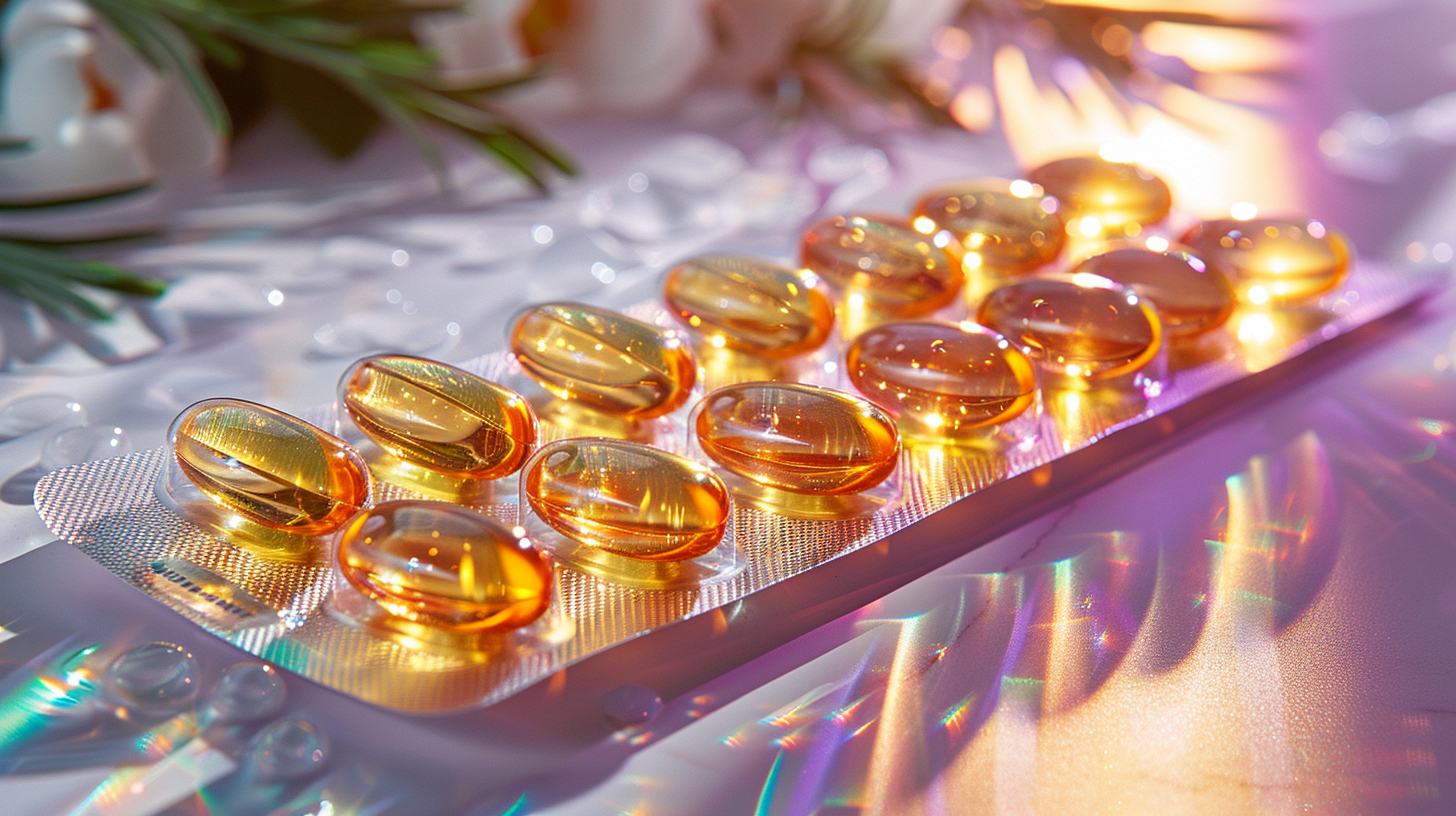
Distributors and importers who plan a private label softgel range usually ask the same first questions: what to send, how many softgels to order, which packs are possible and which documents are needed. This guide explains how a private label softgel project with ACC Nutraceutical in Chumphon, Thailand, moves from a first enquiry to an export shipment, and what you can prepare in advance so the quotation reflects your real product.
Send one specification per product: fill weight, active content, oil source or form, shell preference, and packaging with counts per pack. Softgel MOQ starts at 50,000 softgels per product; the exact figure depends on the oil, softgel size and packaging and is stated in the quotation. Registration and labelling in your country are prepared together with you as the importer.
1. What OEM and private label mean with ACC
In a private label or OEM project, ACC manufactures softgels to a specification agreed with you, and the finished product is sold under your brand. You decide the product range, brand name, label design and target market. ACC’s team reviews whether each specification can be produced and how it should be packed.
There are two common starting points. Some buyers already have a defined specification, for example an omega-3 fish oil softgel of 1,000 mg with a stated EPA and DHA content. Buyers who prefer to supply their own oil or raw material are also welcome; the service cost and minimum order for that work are agreed project by project. Others start from a product idea and a target market and ask the team to propose a specification. Both routes are possible to discuss; the difference is how much development work is needed before a quotation can be issued.
Overseas enquiries often cover several oil-based products at once, such as omega-3 fish oil, algal DHA, omega 3-6-9 blends, krill oil, natural vitamin E or evening primrose oil. Each of these is treated as a separate product with its own specification, quotation and quantity. The team confirms feasibility for each one in the quotation rather than in advance.
2. The specification to send for each product
The more complete the specification, the faster and more accurate the quotation. A short table per product is usually enough. Where you do not yet have a value, say so; the team can suggest options, but the quotation will be based on what is agreed in writing.
Fill weight: the weight of oil per softgel, for example 500 mg or 1,000 mg. This largely determines softgel size and the number of softgels per serving.
Active content: the content you need per softgel and how it is expressed. For omega-3 this means the EPA and DHA content in mg per softgel or the ratio you require, for example 33/22 or 35/25 when quoted as a percentage of the oil. For vitamin E it may be stated in IU, such as 400 IU; for evening primrose oil, the GLA content, such as 10%. Please state the unit clearly, because percentages, mg and IU lead to different raw material choices.
Form and source: whether the oil is fish, algal, krill, plant or a blend, and any source requirements you have, such as country of origin, form of the active (for example, triglyceride or ethyl ester for omega-3) or natural versus synthetic vitamin E. If you have quality expectations for the oil, such as oxidation or contaminant limits, list them here.
Shell preference: the type of shell your market or customers expect, for example a gelatin source preference or a request for a plant-based shell, plus colour and shape (round or oval) if these matter. Shell options depend on the fill and are confirmed by the team.
Packaging and counts: blister or bottle, the number of softgels per blister or bottle, the number of units per carton and any outer carton requirements for export. Section 4 covers the options to request.
Market and quantity: the destination country, your first-order quantity per product and an indication of repeat volumes. This helps the team plan materials and state the correct MOQ for your packaging.

3. MOQ: 50,000 softgels and how to plan per SKU
Softgel MOQ starts at 50,000 softgels per product. The exact minimum for each product depends on the oil, the softgel size and the packaging, and it is stated in the quotation. A product with an uncommon oil or a special shell may have a different minimum from a standard fill.
It helps to convert the MOQ into finished packs before deciding how many products to launch. For example, 50,000 softgels make about 833 bottles of 60 softgels, or 5,000 blister strips of 10 softgels. The same quantity makes about 1,667 bottles of 30 or about 555 bottles of 90.
When planning a range, look at each SKU separately. A distributor that wants five products in two pack sizes is planning several production lots, not one. Many buyers start with a smaller number of products at MOQ, review sales in their market, and then add products or larger quantities. Share your planned range and volumes with the team so the quotation shows the minimum and the cost for each option side by side.
4. Packaging options to request
Softgels are usually packed in blisters or bottles. Neither option is right for every product; the choice depends on your sales channel, the price point you plan, and how the product should be protected from light, moisture and oxygen during shipping and on the shelf.
Blister packs: request the number of softgels per blister strip, for example 10, 15 or 20, the number of strips per box, and whether you need a printed foil or a printed carton only. Blister packing is part of ACC’s services; the possible blister formats depend on the softgel size and are confirmed in the quotation.
Bottles: request the count per bottle, for example 30, 60 or 90 softgels, the bottle material and colour you prefer, the cap type, and any requirement for an inner seal or a desiccant. If you plan to supply your own bottles or boxes, say so at the start so the team can check compatibility with the filling and packing line.
Outer packing: state the number of units per shipping carton and any carton marking you need for import. If you want more than one pack format for the same product, list each one; every format may change the quotation and the MOQ.
5. Documents to provide and to ask for
From you as the distributor or importer, the team will usually need your company registration details, a contact person for technical and label questions, the destination country, and your label artwork or the text and design brief for the label. If the label will be prepared in your language, please arrange a final language check on your side.
From ACC, list the documents you expect to receive with the product. A common request is a certificate of analysis (COA) for each batch. Tell the team which parameters you expect the COA to show, for example active content, oxidation values or microbiological results, so they can confirm in the quotation what will be provided. If your importer or authority needs other documents, such as product specifications, ingredient information or a free sale certificate, list them early, because some documents take time to prepare.
Import registration, product classification and labelling rules differ by country, and they apply in your market rather than in Thailand. These requirements must be handled together with you as the importer. ACC can prepare product information to support your application, but the importer is responsible for checking local rules and completing registration before the products are sold.
6. Step by step: from specification to export shipment
Step 1, specification: you send the specification for each product, your packaging choices, target market and planned quantities.
Step 2, quotation: the team reviews feasibility and issues a quotation that states what can be produced, the MOQ per product and the packaging included. If a specification cannot be produced as requested, the team will explain the gap and suggest an alternative where possible.
Step 3, samples: where needed, samples are prepared so you can check the softgel, the fill and the pack before confirming. Please agree on the scope and any cost of samples at the quotation stage.
Step 4, confirmation: you confirm the final specification, label artwork and quantities. Orders and payment are handled by TIBD Co., Ltd., ACC’s group company.
Step 5, production and packing: the products are manufactured and packed according to the confirmed specification and artwork, and the agreed batch documents are prepared.
Step 6, export shipment: the shipment is arranged with you, including the shipping method, the delivery point and the documents your importer needs for customs clearance.
7. How to start
The simplest first step is a short list: the products you want, one specification for each, your preferred packs and counts, your destination country and the quantity you plan per product. Missing values are not a problem at this stage; mark them so the team knows where you need proposals.
Send your enquiry through the quote form at accnutra.com/en/softgel, by phone at +66 95 194 1709, or through LINE @tibdglobal. The team will confirm what can be produced, the MOQ for each product and the next steps in the quotation.